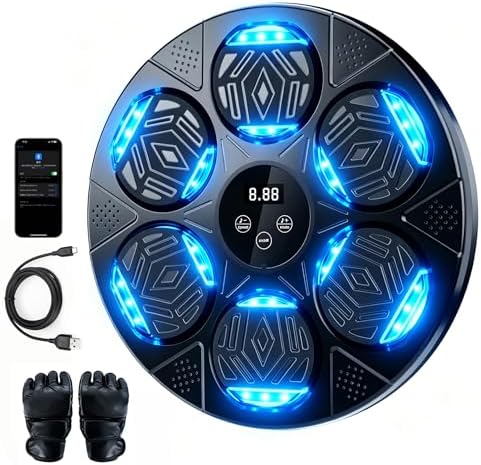
Music boxing machines
LOLBOX Music Boxing Machine, Bluetooth, 7 Speed Modes
A music boxing pad with a front touchscreen that tracks every landed punch, connects to phone playlists, and hangs flat on adhesive strips.
4.3 from 1,823 ratings
Train with technology. Crown with strength.

Controls and light pace
The machine is pressed to the drywall, the phone is linked over Bluetooth, and the controls on the front show a ladder of paces. When the first target lights, the gap between each lit pad decides whether your hands are thinking through each punch or simply reacting to the flash.
Every hit begins with a lit pad on the striking face. At a gentler pace, your eyes see the lit target and your mind has a moment to pick which fist throws the punch and how your feet are set. That gap shrinks as you step up the ladder. Once the pace climbs, there is no time to deliberate: you see the light and the glove must already be on its way. The speed control simply dictates how much time the machine gives you between one target and the next.
The panel does not listen to the songs streaming from your phone. You supply the music through the speaker, but the internal chip drives the light sequence at the exact rate dialed into the front face. Faster songs do not speed up the targets, and slow tracks do not drag them down. Because the rhythm of the lights and the beat of your track run independently, setting the controls to a comfortable starting pace keeps your hands from falling behind.
Begin at the lower end of the speed controls for your first few rounds. If your punches land squarely on the lit targets without rushing and the counter keeps steady pace with your hands, press the button to step up. When you find a setting where punches arrive late or miss the target before the next zone fires, you have found the working line. Stay there until the movement feels routine, then notch the pace up again.
A music boxing pad with a front touchscreen that tracks every landed punch, connects to phone playlists, and hangs flat on adhesive strips.
4.3 from 1,823 ratings
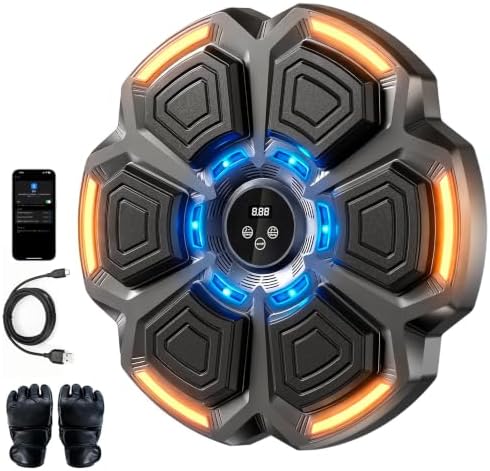
A wider padded panel gives your fists room to land when the lights run fast and you are moving across the wall.
4 from 348 ratings
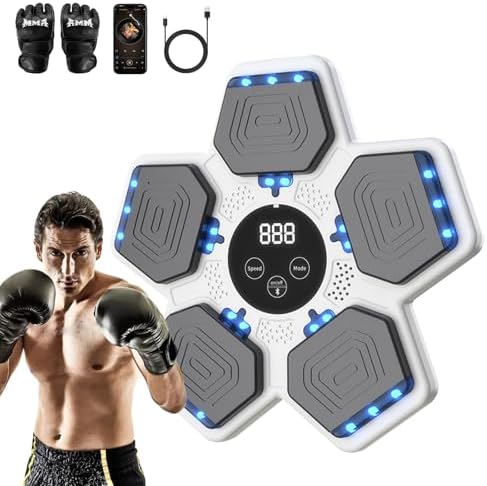
Hang the pale panel on an open patch of wall, cue a playlist from your phone, and start landing hits against the lights.
Every machine and pad across our shelves carries controls on the front to adjust the rhythm of the lights. If you are still deciding between a solo music panel, a reaction build, or a pair for the family, try our one-question tool to see which setup fits the person standing at your wall.